
Description
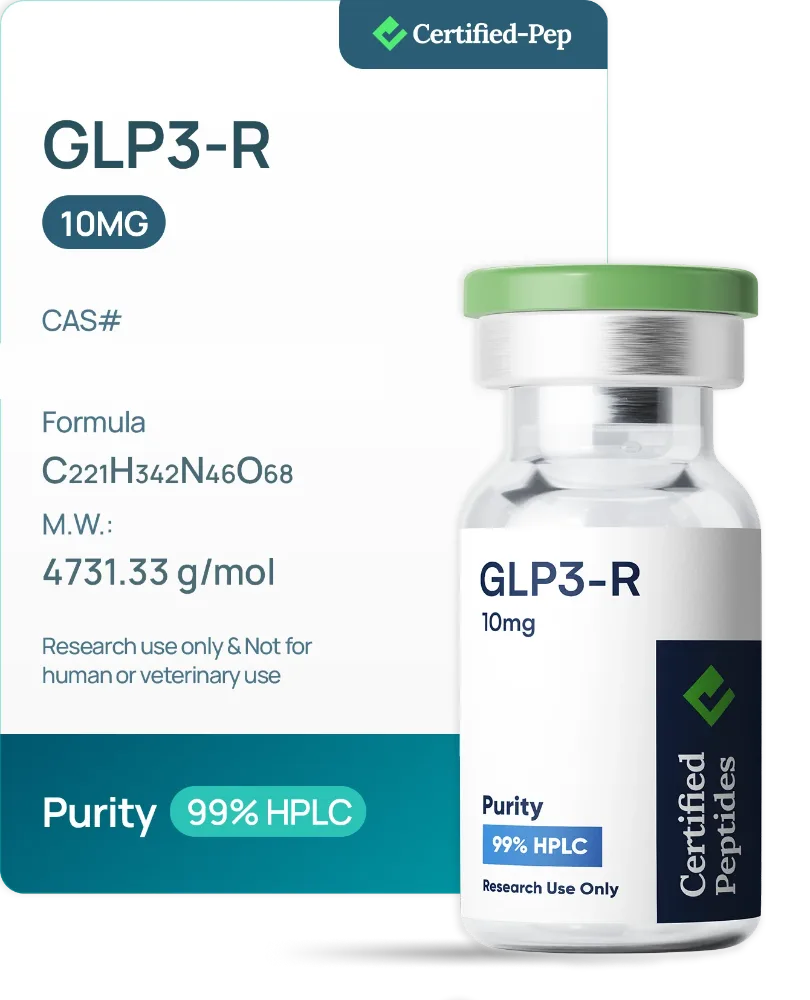
GLP3-R 10mg is a 10mg vial of GLP3-R (retatrutide), a GIP, GLP-1 and glucagon receptor agonist, made in the USA and supplied as freeze-dried powder. It’s intended for lab research only.
About GLP3-R (retatrutide)
Retatrutide (LY3437943, often sold as GLP-3R) is a single peptide from Eli Lilly that acts on three receptors: GIP, GLP-1 and glucagon.
It’s still in clinical trials.
How GLP3-R acts in the lab
Retatrutide hits three receptors with one peptide: GIP, GLP-1 and glucagon. The first two are incretins that boost glucose-dependent insulin release and, in GLP-1’s case, curb appetite and slow stomach emptying.
The glucagon part is the unusual bit. Glucagon raises energy expenditure and pushes the liver to burn fat, so pairing it with the incretins is meant to work on both sides of energy balance. That’s the main reason researchers compare it with the dual and single agonists.
GLP3-R 10mg product details
- Compound: GLP3-R (retatrutide)
- Also known as: LY3437943
- CAS number: 2381089-83-2
- Molar mass: 4,731.3 g/mol
- Structure: 39 amino acids with a fatty diacid side chain
- Amount: 10mg per vial
- Form: lyophilized (freeze-dried) powder
- Vial size: 3mL glass vial
- Purity: 99% or higher by HPLC
- Made in: USA
- SKU: CP-GLP3R-10
- Use: laboratory research only
GLP3-R research
Jastreboff and colleagues reported in the New England Journal of Medicine (2023) a mean weight loss of up to 24% at 48 weeks in a phase 2 trial.
Phase 3 trials are under way.
For the original studies, try this PubMed search.
How GLP3-R compares
GLP3-R 10mg is easier to place once you see it next to the compounds it’s usually compared with. GLP3-R hits GLP-1, GIP and glucagon receptors, the triple agonist with the biggest phase 2 numbers so far. The others:
- GLP1-S acts on the GLP-1 receptor only and lasts about a week, the most studied compound in the group
- GLP2-T adds GIP receptor activity to GLP-1, a dual agonist with larger weight effects than semaglutide in trials
- Cagrilintide works through amylin receptors instead of incretins, often studied next to or with semaglutide
The main difference between these compounds is which receptors they hit. Pick the one that matches the receptor question in your study, and use the others as comparisons. See them all on our GLP-1 peptides page.
How to reconstitute GLP3-R 10mg
Concentration is the amount in the vial divided by the volume of water you add. With 10mg of powder in this vial:
- 1mL of bacteriostatic water gives 10mg/mL
- 2mL of bacteriostatic water gives 5mg/mL
- 3mL of bacteriostatic water gives 3.33mg/mL
Go with whichever number is easiest to work with in your protocol, and label the vial with the concentration and the date you mixed it. The vial itself holds 3mL, so that’s the upper limit.
Use sterile bacteriostatic water, like our 10mL bacteriostatic water. Let the vial reach room temperature, run the water slowly down the inside of the glass, then roll the vial gently until the powder dissolves. Don’t shake it. Shaking can shear peptide chains.
GLP3-R 10mg storage and shelf life
Store sealed vials of GLP3-R 10mg in the freezer (-20°C) or the fridge (2 to 8°C), out of direct light. Mixed solution goes back in the fridge and should be used within about 28 days.
If you keep several vials going at once, our 10 vial container keeps them upright and together on a fridge shelf, and spare 3mL vial caps protect the stoppers once the seals are off.
How GLP3-R 10mg is tested
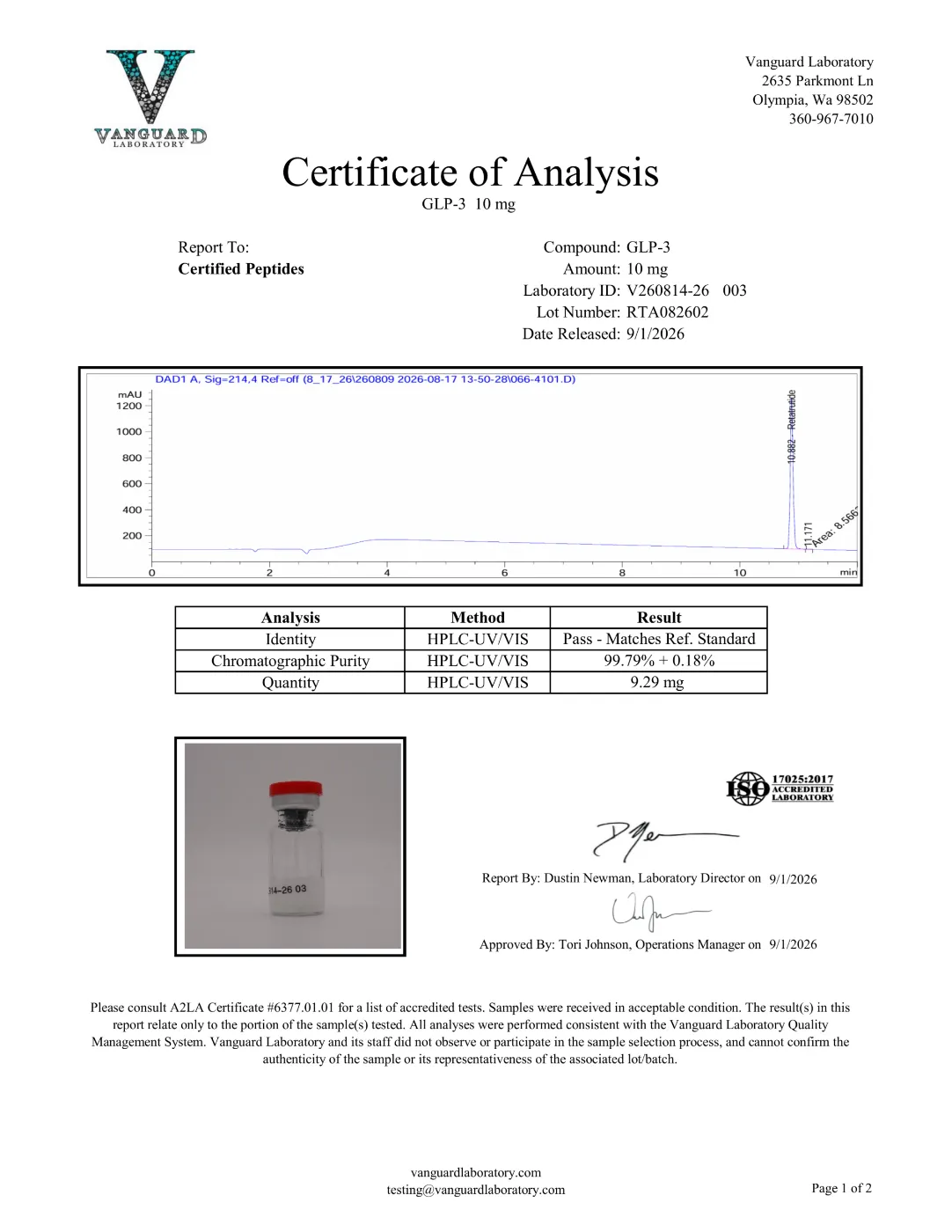
GLP3-R 10mg is made in the USA, and every batch goes to an independent U.S. laboratory before it’s sold. The lab confirms identity, measures the content and checks purity by HPLC. Our standard is 99% or higher.
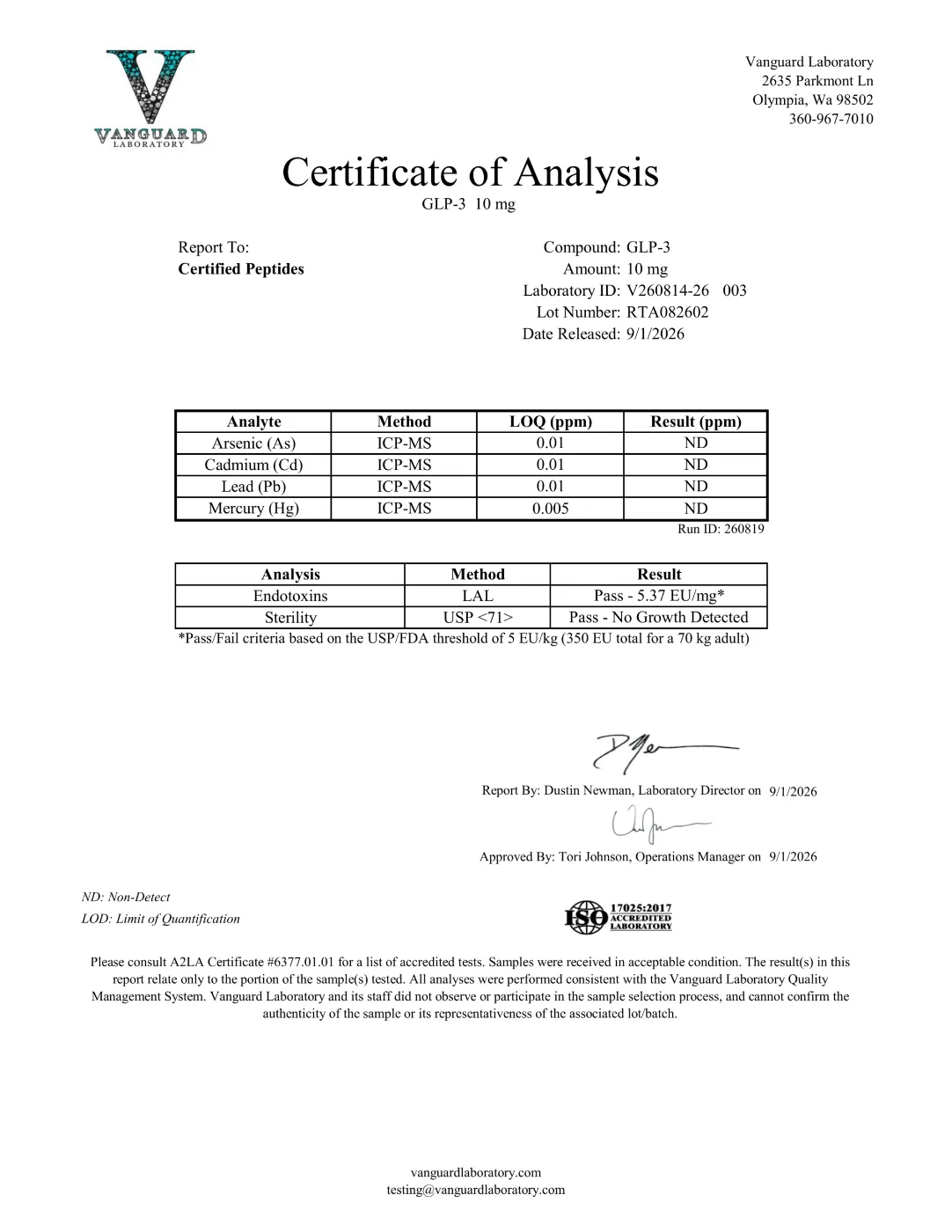
You don’t have to take our word for it. The certificate of analysis for the current batch is in the image gallery at the top of this page, next to the product photo, and it shows the test date and the results.
Batches are also screened for endotoxins, heavy metals and sterility. Those contaminant checks matter as much as purity for cell work, where a small amount of endotoxin can skew results.
Choosing a GLP3-R strength
- GLP3-R 10mg (this page): $140.00, about $14.00 per mg
- GLP3-R 30mg: $200.00, about $6.67 per mg
- GLP3-R 40mg: $240.00, about $6.00 per mg
- GLP3-R 60mg: $270.00, about $4.50 per mg
- GLP3-R 120mg: $450.00, about $3.75 per mg
GLP3-R 10mg is the smallest size. It’s the one to start with for a pilot run or when you’re testing a new protocol.
Related to GLP3-R 10mg
- GLP2-T 10mg, a GIP/GLP-1 agonist
- GLP3-R Cagri Blend 12.5mg/2.5mg, GLP3-R and Cagrilintide in one vial
- SLU-PP-332 Orforglipron Capsules 250mcg/6mg (60 Count), an oral capsule format
- Cagrilintide 10mg, an amylin analog
- GLP1-S 10mg, a GLP-1 agonist
Browse the full GLP-1 peptides and weight loss peptides range, or see every vial on our research peptides page.
GLP3-R 10mg questions
How much is in the GLP3-R 10mg vial?
10mg of freeze-dried powder. The amount is printed on the label.
What is GLP3-R?
GLP3-R is our catalog name for retatrutide. The vial holds retatrutide as freeze-dried powder.
Is there a certificate of analysis for GLP3-R 10mg?
Yes. The current batch’s COA is in the image gallery on this page.
What do I mix GLP3-R 10mg with?
Sterile bacteriostatic water is the usual choice. The reconstitution section above shows the concentration for each volume.
How should I store it?
Keep sealed vials in the freezer for long-term storage or the fridge for a few weeks. Once mixed, refrigerate and use within about 28 days.
Order GLP3-R 10mg today
Ready to order? GLP3-R 10mg costs $140.00 and is in stock. Add it to your cart and you’re done.
Need more for the same project? See the rest of our GLP-1 peptides and weight loss peptides.
For laboratory research use only. Not for human or veterinary use. These statements have not been evaluated by the FDA.
Reviews
There are no reviews yet.