
Certified Peptides Blog
Guides to the research peptides Certified Peptides sells: what each compound is, what the published studies found, and how our sizes and formats compare.
Latest guides on the Certified Peptides blog
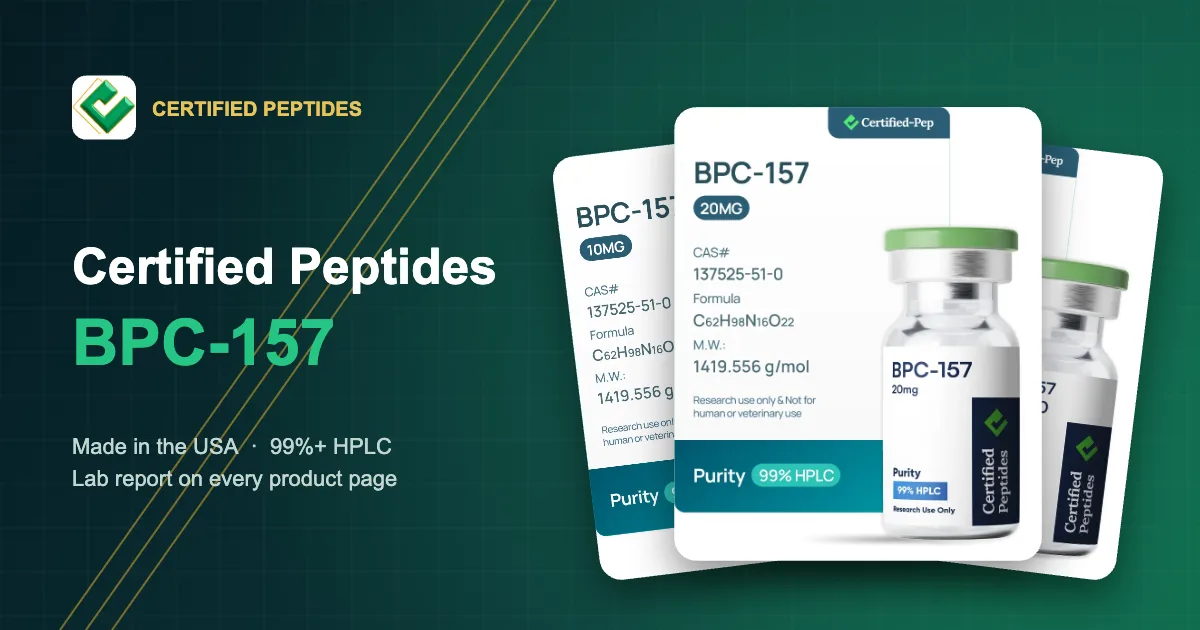
Certified Peptides BPC-157
BPC-157 10mg and 20mg, the blends, the capsules and what the research says.
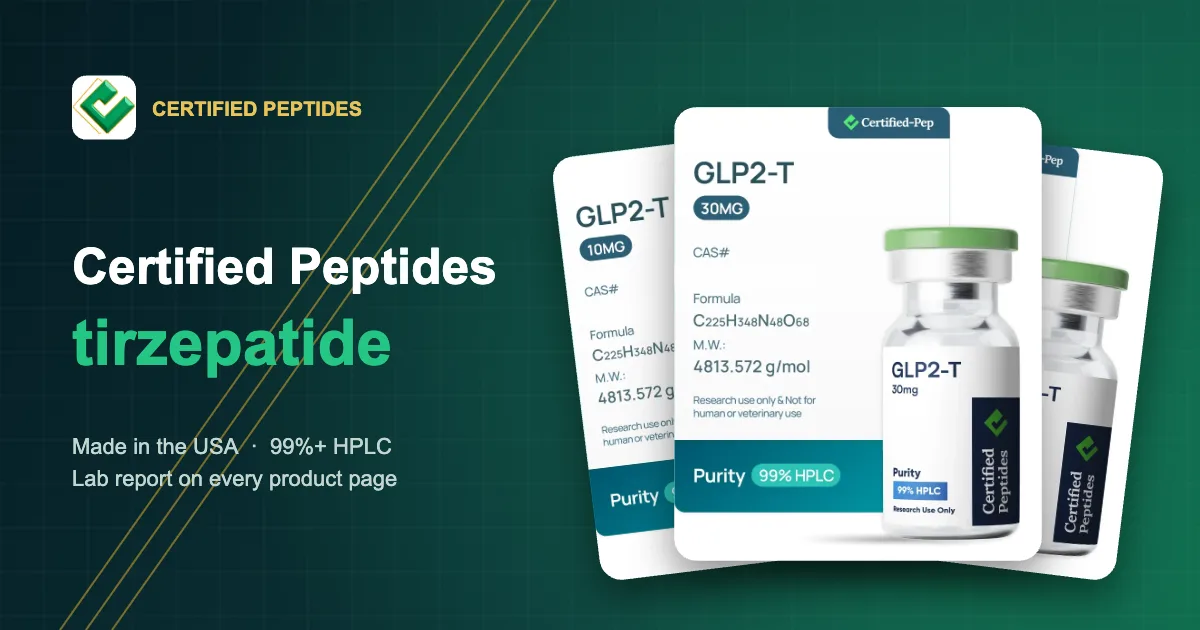
Certified Peptides tirzepatide
The GLP2-T range in 10mg, 30mg and 60mg, and how tirzepatide compares.
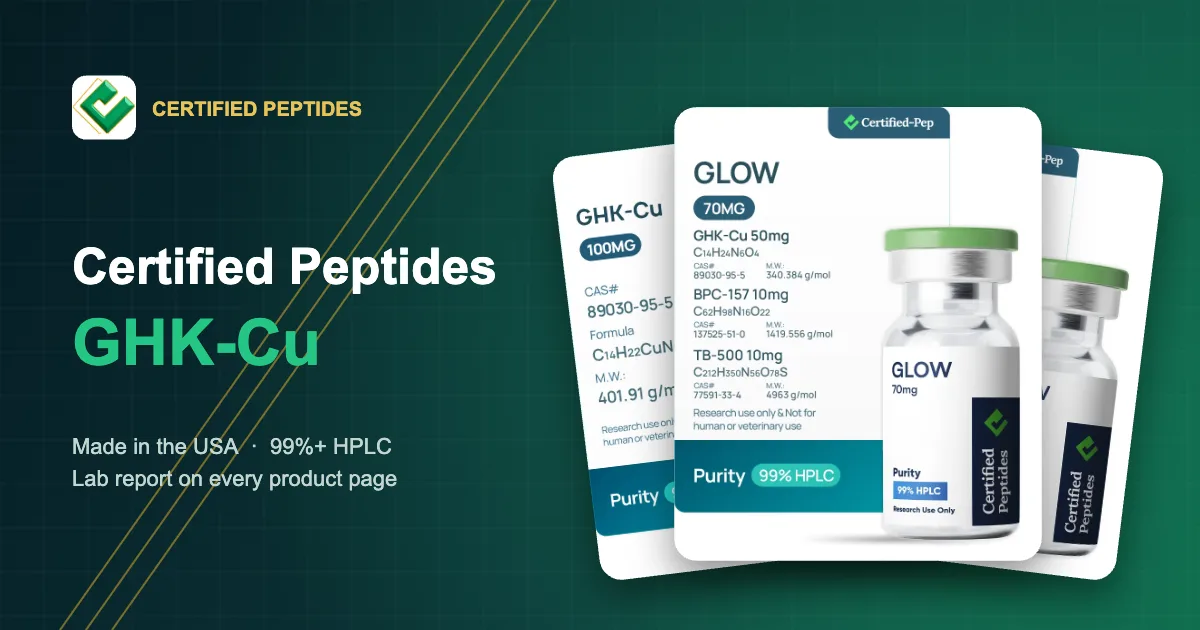
Certified Peptides GHK-Cu
GHK-Cu as a vial, a capsule, raw powder and in the GLOW and KLOW blends.
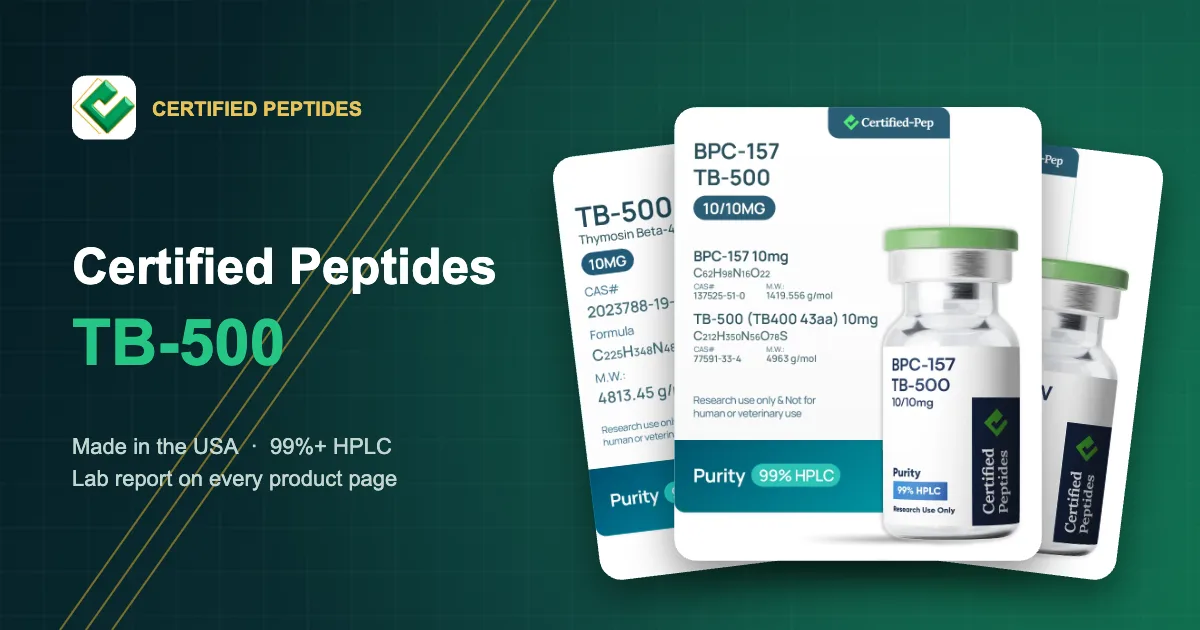
Certified Peptides TB-500
Full-length thymosin beta-4, the blends and the research behind it.
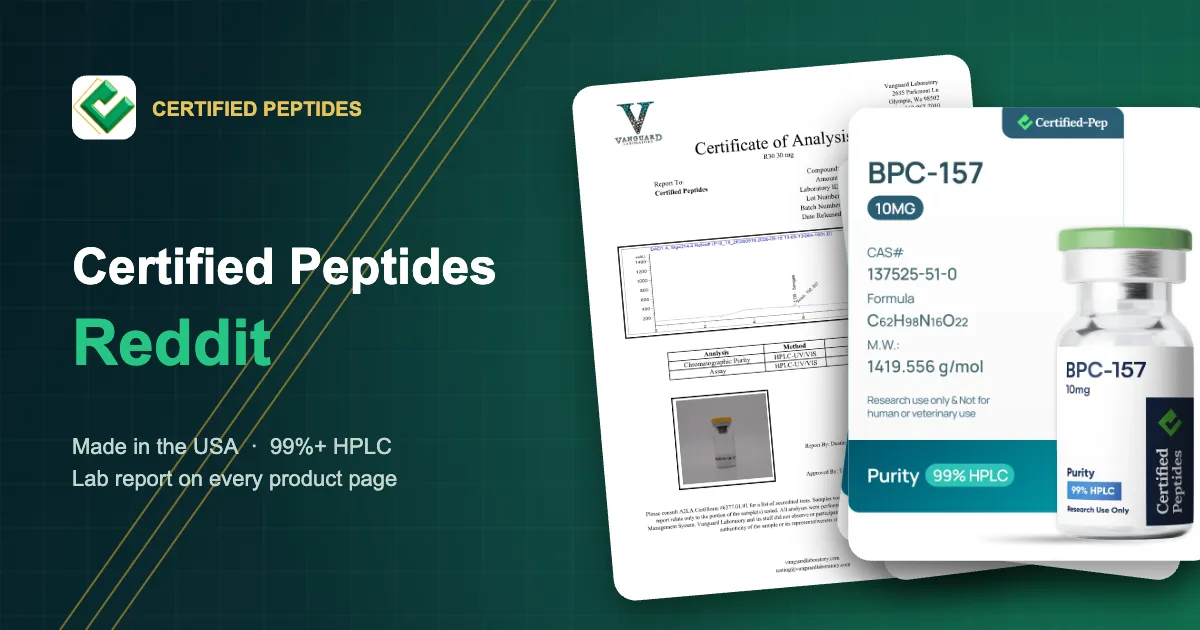
Certified Peptides Reddit
The questions buyers ask on Reddit and forums, answered straight.
What the Certified Peptides blog covers
Each guide sticks to one compound or one question. We cover where the compound came from, how it acts in the lab, the best-known studies, and how our products line up on strength, format and storage.
We don’t give dosing advice or make health claims. When a guide mentions a study, it names the authors or the journal and links to PubMed so you can read it yourself.
Products from the Certified Peptides blog
The guides link straight to the products they discuss, including BPC-157, GLP2-T 30mg, GHK-Cu, NAD+ and TB-500. You can also browse the healing and recovery peptides or the GLP-1 peptides.
How the Certified Peptides blog is written
Every guide starts with what the compound is and where it came from, then covers the sizes and formats we sell, the published research and how to store it. We keep them short enough to read before you order, and we update them when prices or products change.
Two guides aren’t about one compound. The tirzepatide guide explains our GLP code names, and the Reddit guide answers the questions buyers ask on forums without quoting or inventing reviews.
Suggest a topic
Have a compound you’d like covered on the Certified Peptides blog? Email us and tell us what you’re working on.
Certified Peptides products are sold for laboratory research use only. They aren’t for human or veterinary use and haven’t been evaluated by the FDA.