
Certified Peptides Lab Testing
Every Certified Peptides batch is made in the USA and tested by an independent U.S. lab before it goes on sale. Here is what the testing covers and where to find the report.
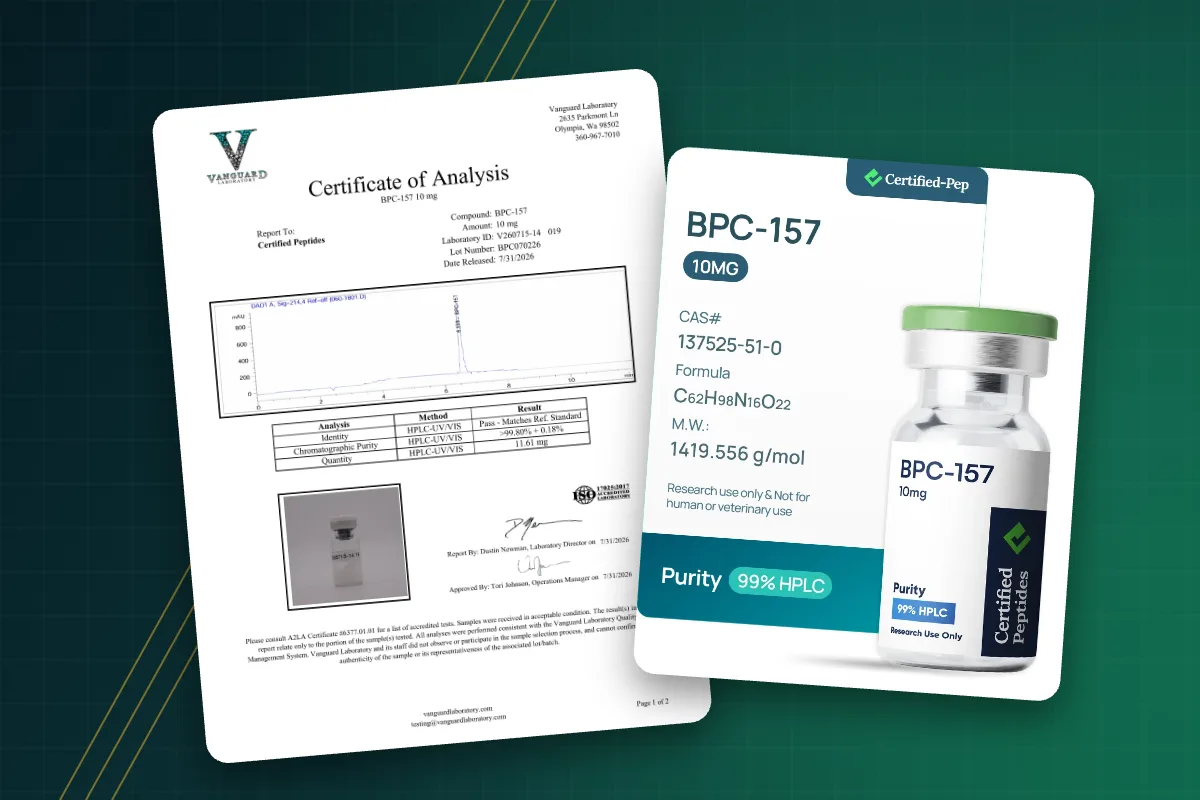
What Certified Peptides lab testing checks
- Identity: the lab confirms the compound by mass spectrometry.
- Content: the amount in the vial is measured against the label.
- Purity: measured by high-performance liquid chromatography (HPLC). Our standard is 99% or higher.
- Endotoxins: bacterial toxins that can skew cell studies even when purity is high.
- Heavy metals and sterility: screened on each batch.
Where to find the lab report
Open a product page and click through the photos. On most products, the second and third images are the certificate of analysis and the contaminant report for the batch in stock, with the test date and the results.
For example, see BPC-157 10mg, GLP3-R 30mg or GHK-Cu 100mg. Need the report for a batch that’s no longer listed? Email us the batch number from the label.
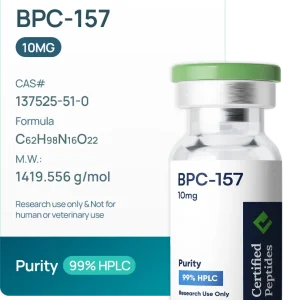
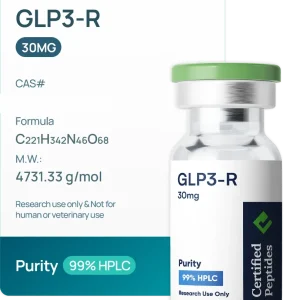
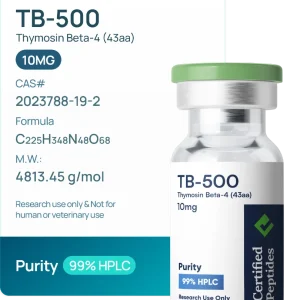
How to read a Certified Peptides lab testing report
The report lists the sample name, the lot number, the methods used and the results. Purity is given as a percentage of the main peak on the HPLC chromatogram. Content is given in milligrams. Endotoxin is given in endotoxin units per milliliter, and heavy metals in parts per million. Each line shows whether the batch conforms to the specification.
Check that the product name and strength on the report match your vial, and note the lot number in your lab records.
Batch numbers and your records
Every vial and bottle carries a batch number. Write it in your lab notes when you open a new one. If results ever look different between two orders, the batch number is the first thing to compare, and it’s the key we use to find the matching report.
What the contaminant report covers
The second report on most product pages covers what purity testing can’t. Endotoxin is a bacterial toxin that can trigger strong responses in cell cultures at tiny amounts. Heavy metals such as lead, arsenic and mercury can come from raw materials. Sterility testing checks that nothing is growing in the sample. Each result is shown against its limit, with a pass or fail.
Why testing matters for research
A peptide that’s 90% pure means a tenth of what you put into an experiment is something else, and you don’t know what. That’s why published methods report purity, and why we post ours. To read how labs validate peptide purity, start with this PubMed search.
Certified Peptides products are sold for laboratory research use only. They aren’t for human or veterinary use and haven’t been evaluated by the FDA.